

Dance Styles
From the Olympic floor to the cypher circle — we teach the authentic foundations of street dance culture. Five disciplines, one studio, endless possibilities.

Ready to groove your way into the world of hip-hop? At Next Move Dance, we offer an exciting and dynamic hip-hop class designed for kids aged 2 to 16. Our passionate instructors teach the fundamentals through energetic choreography, fun activities, and engaging music — creating an inclusive environment that encourages self-expression, confidence, and teamwork.
We introduce young dancers to hip-hop foundation and freestyle, focusing on age-appropriate movements while ensuring every child feels comfortable exploring their unique style.

Waacking is one of the most expressive dance styles on the street dance scene. Waacking is acting, feeling, and grace. In this class, you will learn how to develop character, performance, and a funky groove.
Born in the underground club scenes of Los Angeles, waacking is celebrated for its dramatic arm movements, theatricality, and fierce energy — a style that invites every dancer to shine.

Break Dance (also called Breaking or B-Boying/B-Girling) is an athletic style of street dance with four core elements: top rock, footwork, power tricks, and power moves — each developing different muscle groups and skills.
Breaking is now not just a famous hip-hop style — it's an Olympic sport, following the historic decision by the International Olympic Committee to have BBoys and BGirls compete at the 2024 Paris Games.
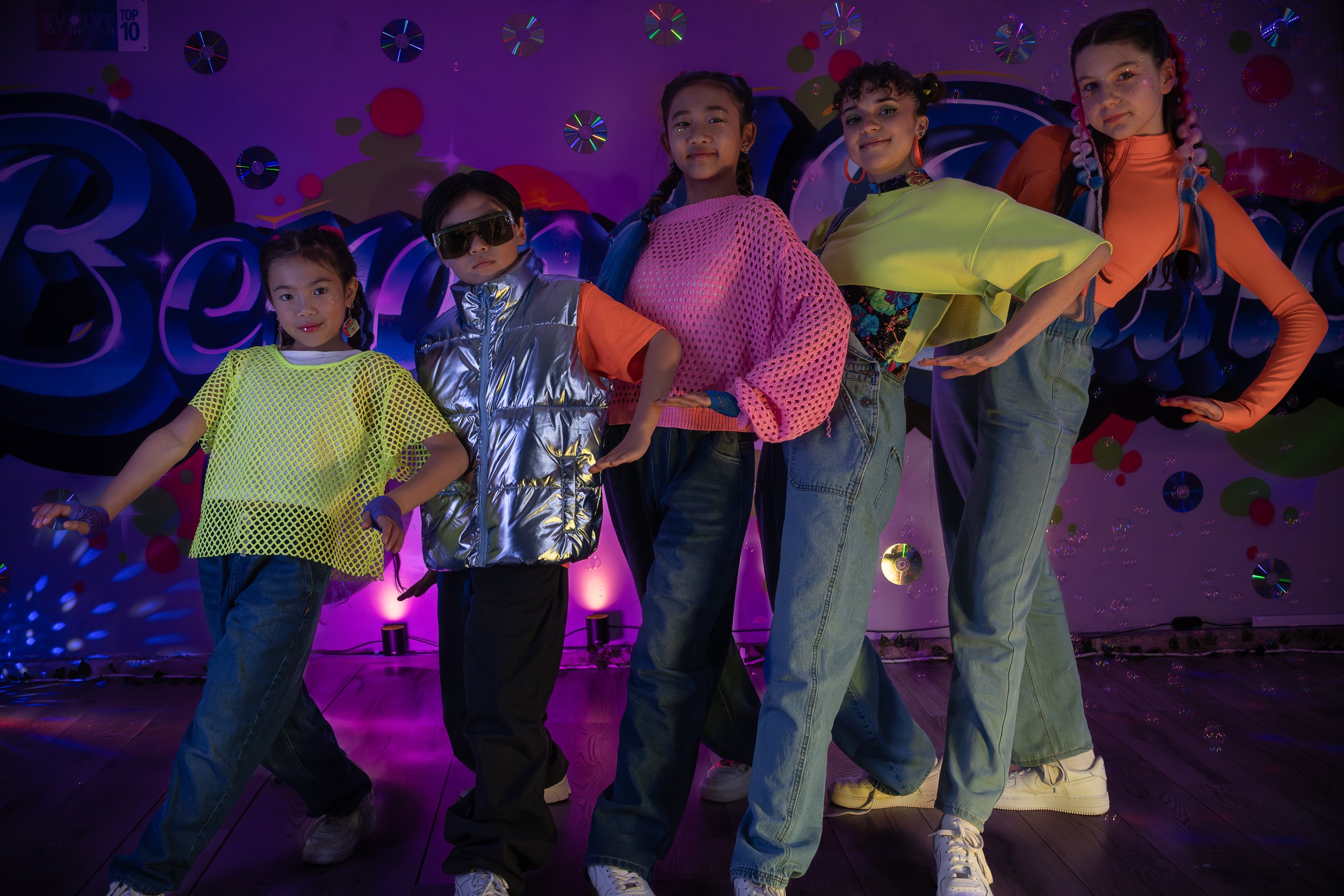
Popping is a street dance adapted from the Boogaloo cultural movement in Oakland, California. Rooted in live funk music, it's based on quickly contracting and relaxing muscles to create a sudden jerk or stop — called a pop or hit — performed continuously to the rhythm in combination with various movements and poses.
Popularized by the Electric Boogaloos, popping blends technical precision with creative expression and is open to dancers starting from age 2.

Urban Choreography is a community and lifestyle revolving around choreographed pieces and performances by a dancer or groups of dancers, influenced by several different dance styles.
This class builds performance skills, stage presence, and the ability to pick up and execute choreography — essential skills for any dancer looking to perform, compete, or pursue dance professionally.


